STAR.VISION at COP29: Empowering Climate Research with Spaceborne AI and Space Computing
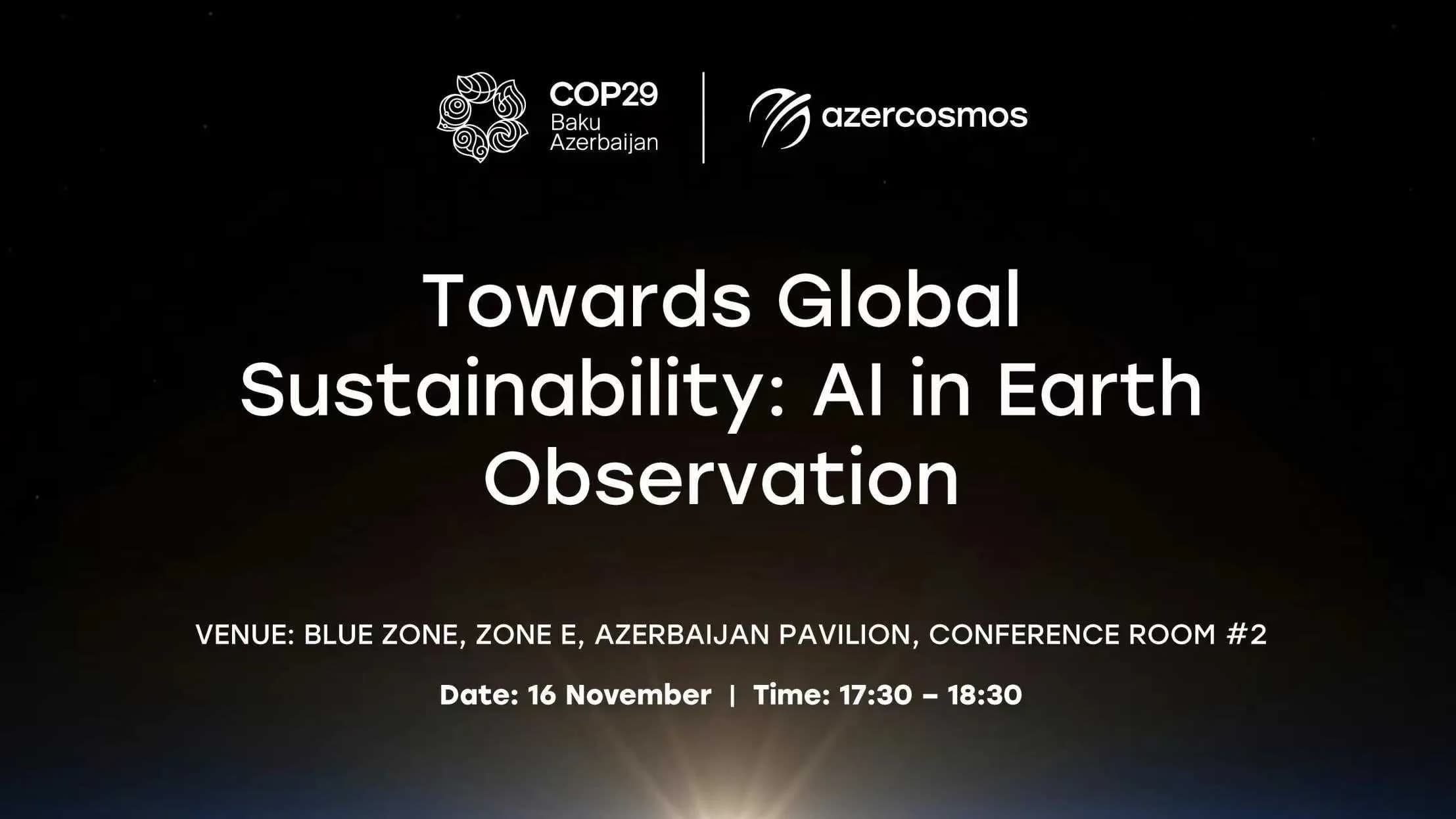
At the 29th United Nations Climate Change Conference (COP29) in Baku, Azerbaijan, STAR.VISION, in collaboration with the Azerbaijan Space Agency (Azercosmos), delivered a presentation titled “Climate Change Impact on the Caspian Sea Using Space AI.” This marks the first time a Chinese company has showcased spaceborne AI and space computing achievements at an international climate conference.
November 16, 2024 @STAR.VISION
Focus on the Caspian Sea: Climate Change and Coastal Impacts
The presentation highlighted the effects of climate change on the Caspian Sea’s coastline and water quality. Leveraging its innovative spaceborne AI computing unit, STAR.VISION performed high-precision analyses of the Caspian Sea region and Azerbaijan's coastal areas using remote sensing imagery and deep learning algorithms. Over the past few decades, the Caspian Sea has experienced a continuous drop in water levels, leading to coastal retreat and an increase in exposed land. Key water quality indicators, such as chlorophyll concentration and the trophic state index, have also undergone notable changes.
The research was supported by the Remote Sensing Team of Ningbo University, which contributed to the processing of remote sensing imagery for the Caspian Sea region.
Spaceborne AI and Real-Time Computing
The study further revealed significant ecological impacts caused by climate change on the Caspian Sea region. For example, between 2014 and 2024, the coastline of Azerbaijan's Gizil-Agach State Nature Reserve retreated by 218 square kilometers, profoundly altering wetland ecosystems and threatening migratory bird habitats and coastal biodiversity. Additionally, the variation of water quality eutrophication in recent years has been closely linked to human activity and changing climate conditions.
STAR.VISION’s “STRING” AI computing unit efficiently processes large-scale remote sensing data, enabling rapid monitoring of coastlines, water quality assessment, and ecological change predictions. This cutting-edge technology transforms complex remote sensing data into actionable insights, providing new pathways for global climate research.
Rideshare Program and Global Collaboration
At the conclusion of the presentation, STAR.VISION invited more global partners to join its “Spaceborne AI Algorithm Rideshare Program 2.0” initiatives. The program aims to create a shared platform that integrates remote sensing data and AI computational power, offering robust support for addressing climate change and protecting the environment.
STAR.VISION believes that through open collaboration and resource sharing, technology can play a vital role in achieving global environmental goals and sustainable development. With spaceborne AI and space computing at its core, STAR.VISION is committed to working with governments, research institutions, and businesses worldwide to build a greener and brighter future.

Stay Informed
Subscribe STAR.VISION’s Newsletter

If you would like to receive email updates from STAR.VISION Newsroom, please complete the information above.